The debate surrounding Aadhaar, citizenship, and voting rights has resurfaced with renewed intensity as the Supreme Court of India begins final hearings on petitions challenging the Election Commission’s Special Intensive Revision (SIR) of electoral rolls. At the heart of the controversy is a critical question: Can foreigners who hold Aadhaar be mistakenly included in India’s voter list?
This issue, although technical on the surface, carries major implications for the integrity of the electoral process, citizenship verification mechanisms, and the balance between administrative efficiency and constitutional safeguards.
Aadhaar: Not Proof of Citizenship, Says Supreme Court
During the initial hearings, the Supreme Court made a significant observation—Aadhaar cannot be considered absolute proof of citizenship. This clarification comes at a time when Aadhaar is widely used as a primary document for identity verification across various public and private services. However, the Court emphasised that Aadhaar was originally conceived as a tool for proof of identity and residence, not proof of nationality.
This distinction is crucial. Millions of residents, including foreigners lawfully living in India, are eligible to obtain Aadhaar. Allowing Aadhaar alone to decide a person’s voting eligibility could risk the inadvertent inclusion of non-citizens in the electoral rolls. The Supreme Court highlighted this concern while examining the mechanisms adopted in the Election Commission’s Special Intensive Revision process.
Understanding the SIR (Special Intensive Revision) of Electoral Rolls
The Election Commission’s Special Intensive Revision is a periodic exercise aimed at updating and verifying the electoral roll. Through SIR, officials attempt to:
-
Identify missing or deleted voters
-
Correct mistakes in entries
-
Add new eligible voters
-
Remove ineligible or duplicate entries
Petitioners, however, raised concerns that the SIR process heavily relies on Aadhaar-based verification. This, they argued, could compromise accuracy because Aadhaar does not distinguish between citizens and non-citizens. According to them, the possibility of foreigners holding Aadhaar cards could create scope for errors or manipulation, especially in regions facing demographic or migration-related complexities.
foodrecipetrick.com | tourismsections.com | clinicalhealths.com
thebabycares.com | LiveMusicCity.net
The Core Issue: Citizenship Verification vs. Administrative Practicality
The case essentially revolves around the manner in which voter verification is conducted. While Aadhaar can help streamline identity verification, the Supreme Court underscored that the right to vote is reserved exclusively for Indian citizens. Thus, depending on Aadhaar alone during registration or verification could invite constitutional challenges, particularly under Articles 14, 19, and 326.
The petitioner’s argument raises a valid concern: If Aadhaar is not proof of citizenship, can it serve as a reliable basis for voter authentication?
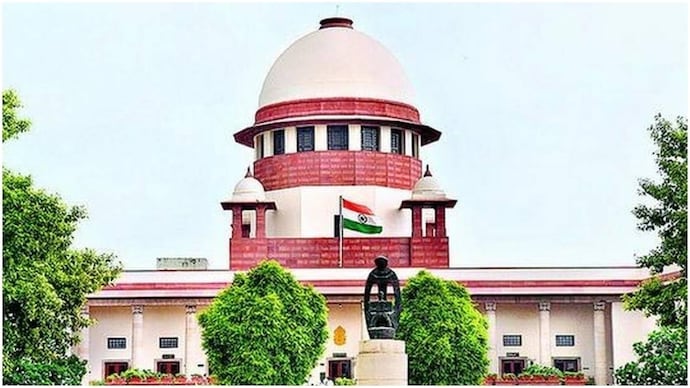
The Court is now tasked with examining whether the SIR process aligns with constitutional safeguards and whether the Election Commission needs to adopt additional or alternative verification methods.
Election Commission’s Defense: Balancing Accuracy and Inclusion
The Election Commission maintains that Aadhaar is used only as one of many tools to improve electoral accuracy. Officials have argued that the purpose of linking Aadhaar with voter ID is to reduce duplication, impersonation, and outdated entries. They also claim that Aadhaar-based authentication is entirely voluntary and not mandatory for voter registration.
Yet, civil rights groups insist that even voluntary reliance on Aadhaar could pressure individuals into sharing sensitive data or risk exclusion if they are unable to link documents. Concerns also exist about possible data misuse, lack of transparency in verification methods, and risks to personal privacy.
Why This Case Matters for India’s Democracy
The Supreme Court’s ongoing examination has far-reaching implications:
1. Protecting the Sanctity of Elections
Ensuring that only eligible citizens vote is essential for a functioning democracy. The possibility of foreigners being added to the voter list—even unintentionally—raises red flags about electoral integrity.
2. Clarifying Aadhaar’s Legal Standing
This case further solidifies the Supreme Court’s consistent stance: Aadhaar is an identity document, not a citizenship certificate. This clarity matters in policymaking, administration, and constitutional interpretation.
3. Strengthening Verification Processes
The outcome may prompt the Election Commission to refine its processes, possibly introducing more stringent or diverse verification requirements beyond Aadhaar.
4. Data Protection and Privacy Considerations
As Aadhaar-based systems continue to expand, balancing efficiency with privacy and security becomes a constitutional necessity.
What Lies Ahead?
The Supreme Court’s final verdict will likely set a major precedent for how Aadhaar is used in elections and other national processes. The ruling could mandate stronger safeguards, introduce alternative verification steps, or reshape the SIR framework entirely.
The central theme remains clear: Voting is a constitutional right reserved only for citizens, and any system that risks blurring this distinction must undergo careful judicial scrutiny.
As the hearings progress, the case promises to shape the future of India’s electoral reforms, influence identity-verification standards, and redefine the role of Aadhaar in governance. The Court’s final decision will undoubtedly have a lasting impact on India’s democratic landscape, ensuring that its electoral rolls remain accurate, secure, and constitutionally sound.